
Rubber Weathering: How UV, Ozone, Water and Outdoor Exposure Affect Rubber Performance
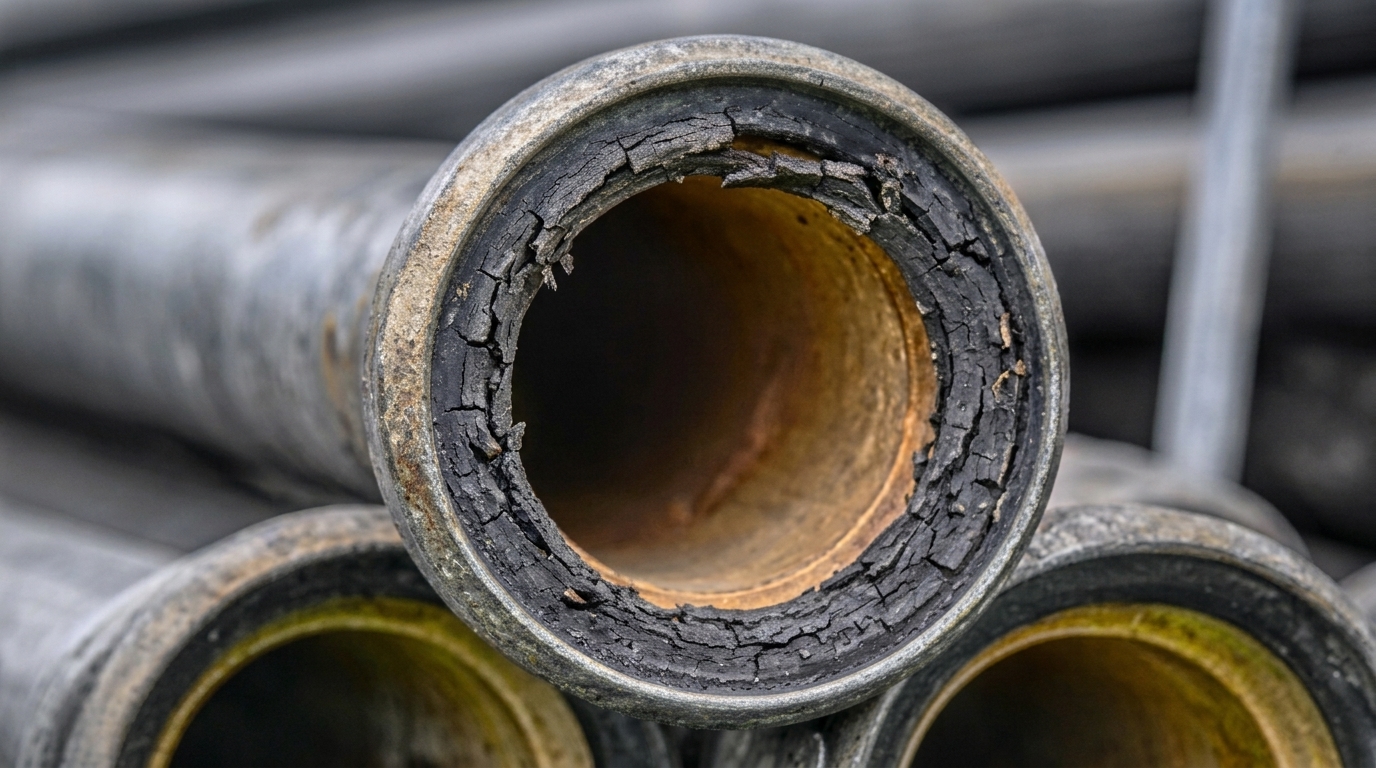
Rubber weathering is the gradual degradation of rubber exposed to sunlight, ozone, moisture and changing temperatures. Over time, it can change a compound’s hardness, strength, elasticity and surface, and shorten the service life of outdoor rubber parts. Knowing how each factor works is the first step to choosing the right material.
At a glance
| Factor | What it does to rubber | How to design against it |
| UV radiation | Photo-oxidation at the surface: color change, cracking, hardening and brittleness. | Suitable polymer; antioxidants and UV stabilizers. |
| Ozone | Surface cracks, especially on stretched parts. | Ozone-resistant polymer; antiozonants or protective waxes; limit strain in part design. |
| Water and moisture | Changes in hardness, modulus and volume; weaker bonds with other materials. | Formulate for the real exposure: immersion, humidity or wet–dry cycles. |
| Combined exposure | Damage builds up and property changes speed up. | Design for the full service environment, not one factor. |
UV radiation
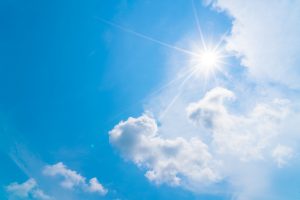
UV rays in sunlight are a major cause of polymer degradation, especially on surfaces exposed for long periods. Continuous exposure triggers photo-oxidation, which changes the polymer structure at the surface. Oxygen, heat and other conditions can speed this up.
Typical signs include color change, surface deterioration or cracking, and rubber that turns harder or more brittle. Over time, tensile strength, elongation and elasticity can also change, depending on how strong and how long the exposure is.
For outdoor parts, UV resistance should be built in from the start, through polymer selection, compound design and additives such as antioxidants or UV stabilizers.
Ozone and ozone cracking
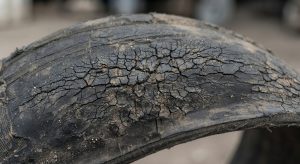
Some rubbers have polymer structures that react readily with ozone. The reaction happens at the surface. When the part is stretched or under constant tension, it can produce cracks known as ozone cracking.
Severity depends on more than ozone level. Polymer type, temperature, strain and exposure time all play a part.
Prevention starts with a polymer that has the ozone resistance the application needs. Antiozonants or protective waxes can add surface protection. Part design matters too: controlling strain is critical for components that are always stretched or under load.
Water and moisture
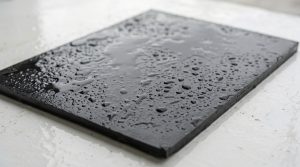
Outdoor parts meet water in many forms: rain, humidity, condensation, immersion, and repeated wetting and drying. Long exposure can affect the rubber and some compound ingredients. How much depends on the polymer, the formulation and the operating environment.
Possible effects include changes in hardness or modulus, volume and mechanical properties. In some applications, the interface between rubber and other materials can also degrade.
So the question isn’t just “will it get wet?” It’s how the part gets wet, for how long, and alongside what else. Wet–dry cycles, or temperature swings combined with moisture, are very different from a single soak, so water resistance should be specified for the real operating environment.
When factors combine
In real use, rubber rarely faces one factor at a time. UV, ozone, water, temperature, humidity and mechanical stress often act together, and their damage builds up over the part’s life. That’s why material choices should account for the product’s full service environment, not just sun or rain.
Choosing rubber for outdoor applications
Good outdoor design starts by defining the real operating conditions before choosing a material. Key questions to answer:
- How much UV and sunlight will the part see?
- Will it be exposed to ozone?
- What kind of water or moisture contact is expected?
- What temperature range must it handle?
- How much mechanical stress and stretching will it take?
- How long must it last?
The answers guide the choice of rubber type, raw materials and additives, as well as the compound formulation and cure system. Mixing and processing matter as much as the recipe: tight process control gives consistent properties that meet the application’s requirements.
Testing environmental resistance
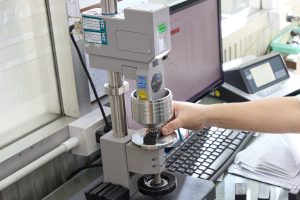
Testing shows how well a compound holds up in the conditions it will face. Tests can be designed around the intended use, such as UV, ozone, water and moisture, temperature changes or combined weathering.
After exposure, the rubber’s properties are compared with its original values to measure how much has changed and how much is retained. Common measures include:
- Hardness
- Tensile strength
- Elongation
- Elasticity
- Surface condition and cracking
The results help compare materials, select polymers and additives, refine formulations and support quality control.
Inter Rubber’s approach
At Inter Rubber, environmental resistance is part of material development from the start. We begin by understanding the application and the conditions the product will face. Then we design around them, from material selection, compound formulation and additives to control of mixing and vulcanization.
We also test and evaluate our materials to study how they change under conditions that reflect real use.
Developing a rubber part for outdoor use? Talk to our team!