
Rubber Vibration Isolators
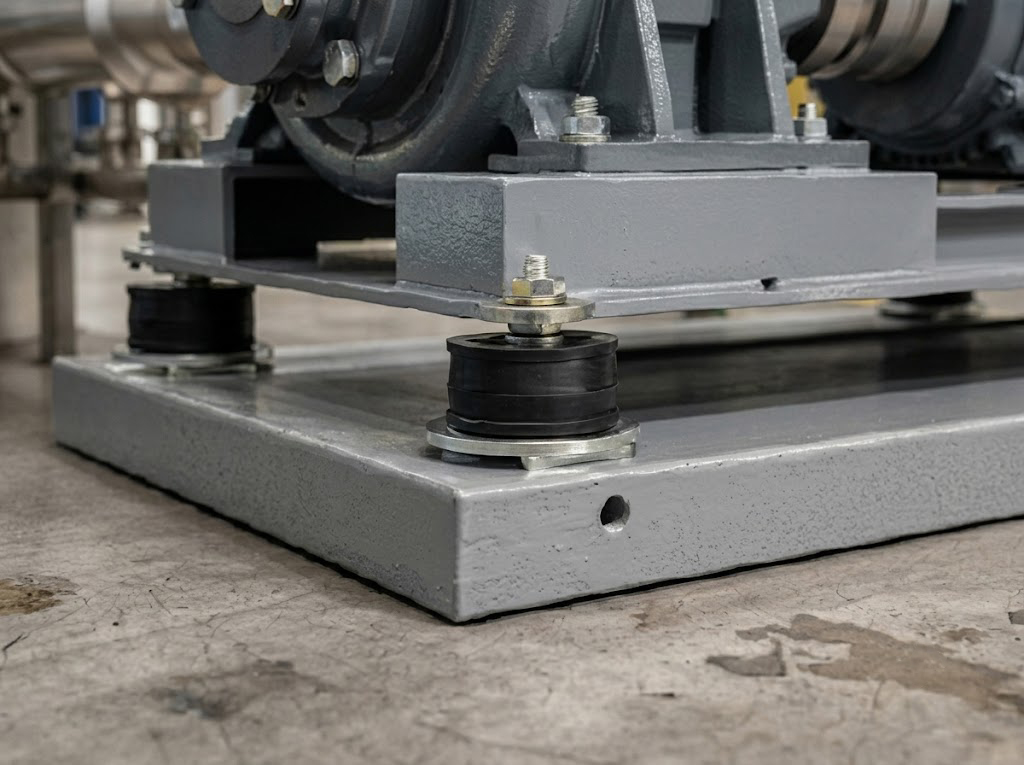
Rubber vibration isolators are engineered components designed to reduce and control the transmission of vibration from machinery to surrounding structures and equipment. By minimizing vibration transfer, they help improve operational stability, reduce noise, and extend the service life of both machinery and supporting systems. Rubber vibration isolators are widely used across industrial and commercial applications, including machinery foundations, electrical appliances, and automotive systems.
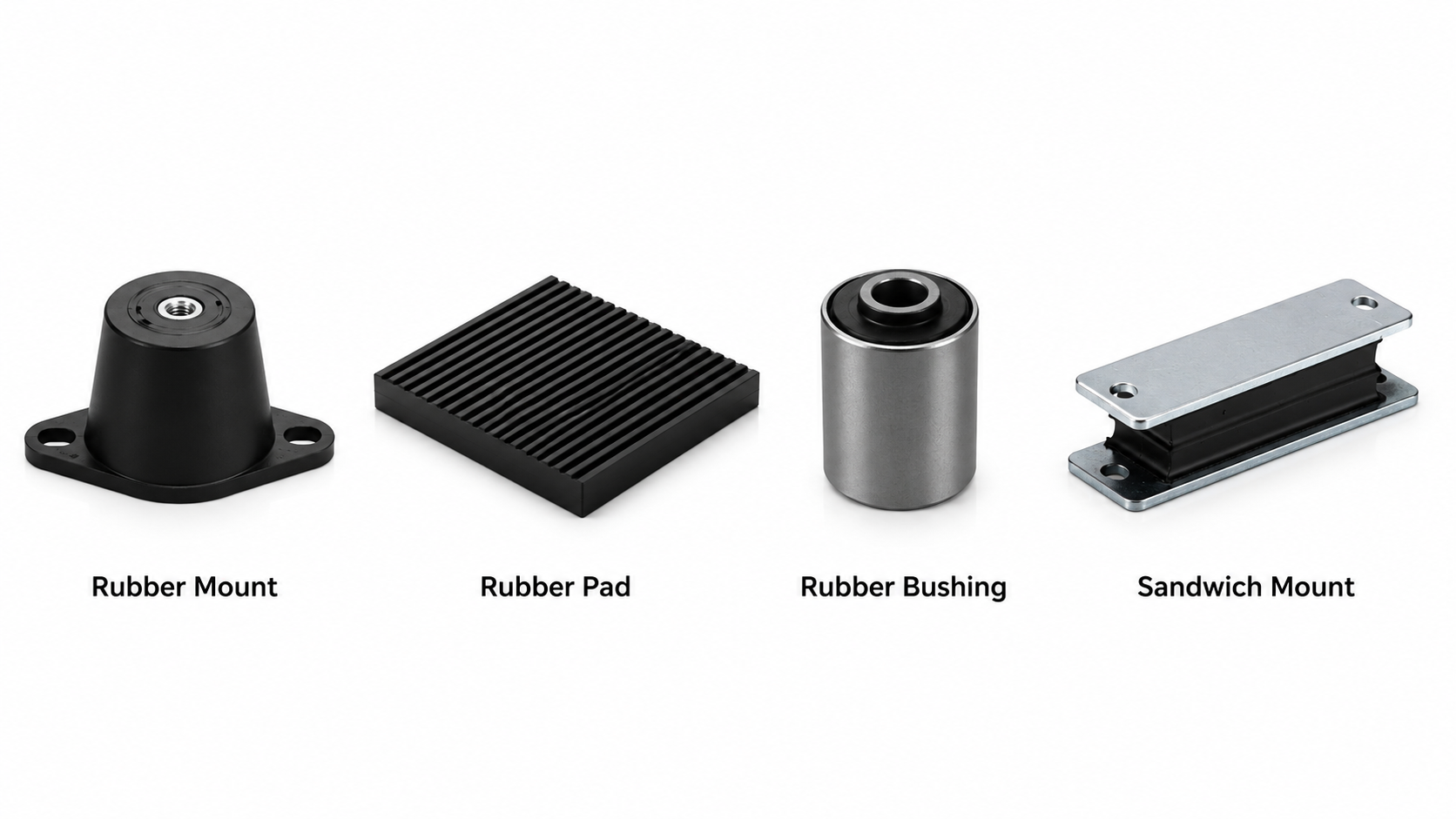
Common types of rubber vibration isolators include:
- Rubber Mounts – Used to support machinery such as motors, pumps, and industrial equipment
- Rubber Pads – Cushioning pads designed to absorb impact and vibration
- Rubber Bushings – Commonly used in automotive suspension systems
- Sandwich Mounts – Vibration isolators consisting of rubber bonded between two metal plates
How Rubber Vibration Isolators Work
Rubber vibration isolators utilize two key material properties of elastomers:
- Elasticity – The ability to deform under load and return to the original shape
- Damping – The ability to absorb and dissipate vibrational energy
When vibration occurs, the rubber element deflects and absorbs part of the energy, reducing the amount of vibration transmitted to surrounding structures.
Frequency Ratio and Vibration Isolation
One of the most important principles in vibration isolation design is the Frequency Ratio (r), which compares the machine’s excitation frequency to the natural frequency of the vibration isolator.
|
𝑟=F/Fn | |
|
||
For optimal vibration isolation performance, the excitation frequency should be significantly higher than the natural frequency of the isolator.
Factors Affecting Vibration Isolator Performance
The effectiveness of a rubber vibration isolator depends on several engineering factors:
- Rubber hardness (Shore A)
- Geometry and dimensions
- Applied load
- Vibration frequency
- Operating temperature
Advantages of Rubber Vibration Isolators
- Cost-effective solution
- Simple installation
- Minimal maintenance requirements
- Effective vibration and noise reduction
- Suitable for a wide range of industrial applications
Limitations of Rubber Vibration Isolators
- Rubber properties degrade over time due to aging
- Less effective when operating near the system’s natural frequency
- Elevated temperatures can reduce performance and service life
Vibration Isolator Selection Guide
Selecting the appropriate vibration isolator requires consideration of both machine characteristics and operating conditions.
1. Gather Application Data
Key information should include:
- Machine weight
- Operating speed (RPM or Hz)
- Number of support points (e.g., 4-point or 8-point support)
- Environmental conditions such as: Operating temperature, Oil exposure, Outdoor installation
2. Determine Excitation Frequency and Natural Frequency
Calculate the machine’s excitation frequency (F) and select an isolator with an appropriate natural frequency (Fn).As a general guideline, the natural frequency of the isolator should be approximately 3–5 times lower than the excitation frequency to achieve effective vibration isolation.
3. Select the Appropriate Rubber Hardness
| Shore A | Hardness Level | Typical Load Capacity | Vibration Isolation Performance |
| 40-50 | Soft | Suitable for light-duty machinery | Excellent vibration absorption |
| 60-70 | Medium | Suitable for medium-duty machinery | Balanced load support and vibration isolation |
| 80-90 | Hard | Suitable for heavy-duty machinery | Lower vibration absorption capability |
4. Verify Static Deflection
A vibration isolator must deflect under load in order to isolate vibration effectively. As a general guideline:
- 5–15 mm deflection is considered suitable for most applications
- Too little deflection may result in insufficient vibration isolation
- Excessive deflection may reduce machine stability
5. Determine the Number of Isolators
For large machines requiring multiple vibration isolators to distribute the load, all isolators should have closely matched characteristics to ensure balanced load sharing and consistent vibration control.
Engineering Recommendations
- High-speed rotating equipment (e.g., electric motors) → Use softer rubber isolators
- Low-speed machinery (e.g., reciprocating pumps) → Consider combining rubber isolators with spring systems
- Applications with high impact loads → Select isolators with higher damping characteristics
- Excessively hard rubber → May significantly reduce vibration isolation effectiveness