
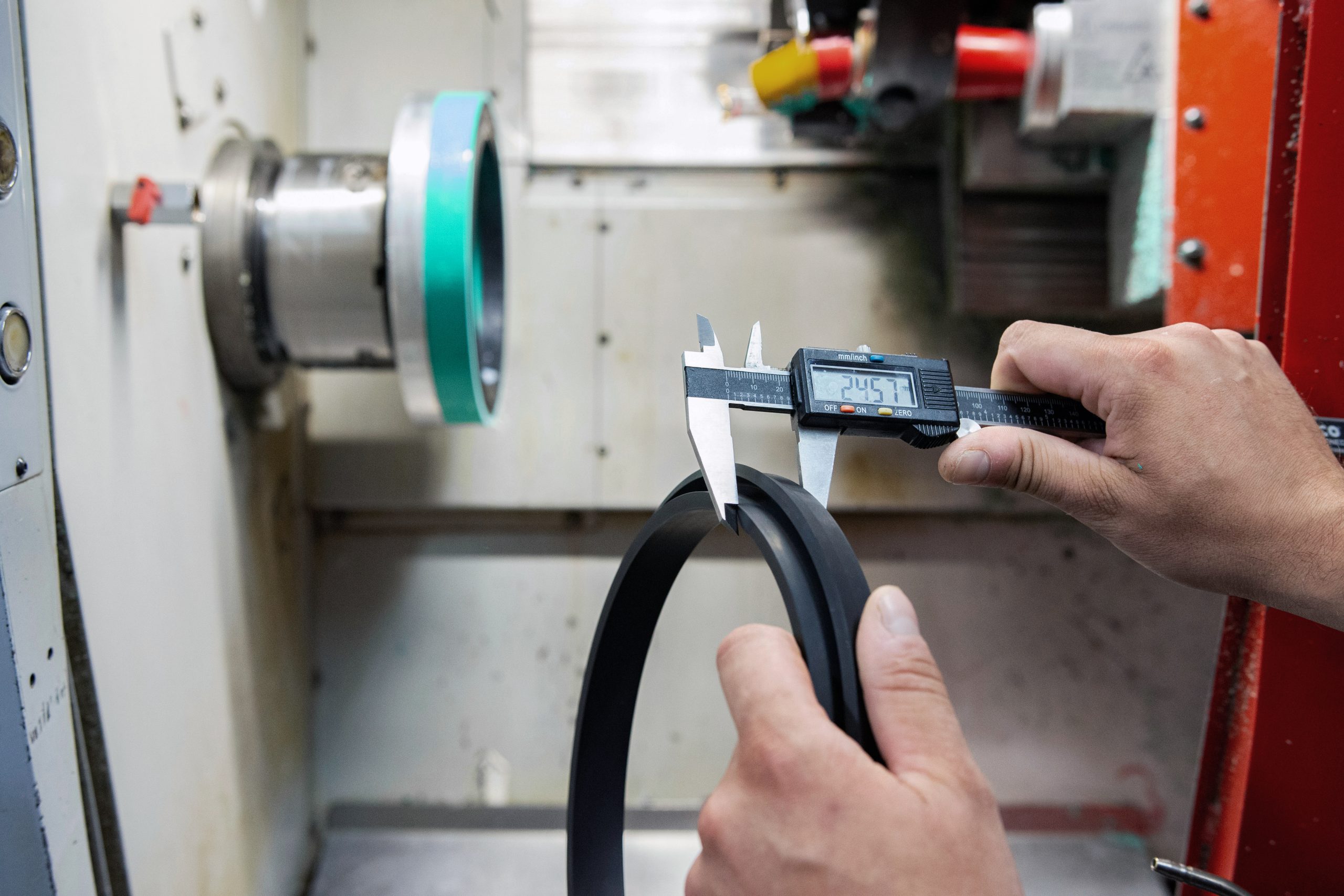
Rubber Molding Processes
Rubber molding can be performed using several manufacturing methods. The three most widely used processes are Compression Molding, Transfer Molding, and Injection Molding. Each method offers distinct advantages and is suited to different product requirements, production volumes, and performance expectations.
1. Compression Molding
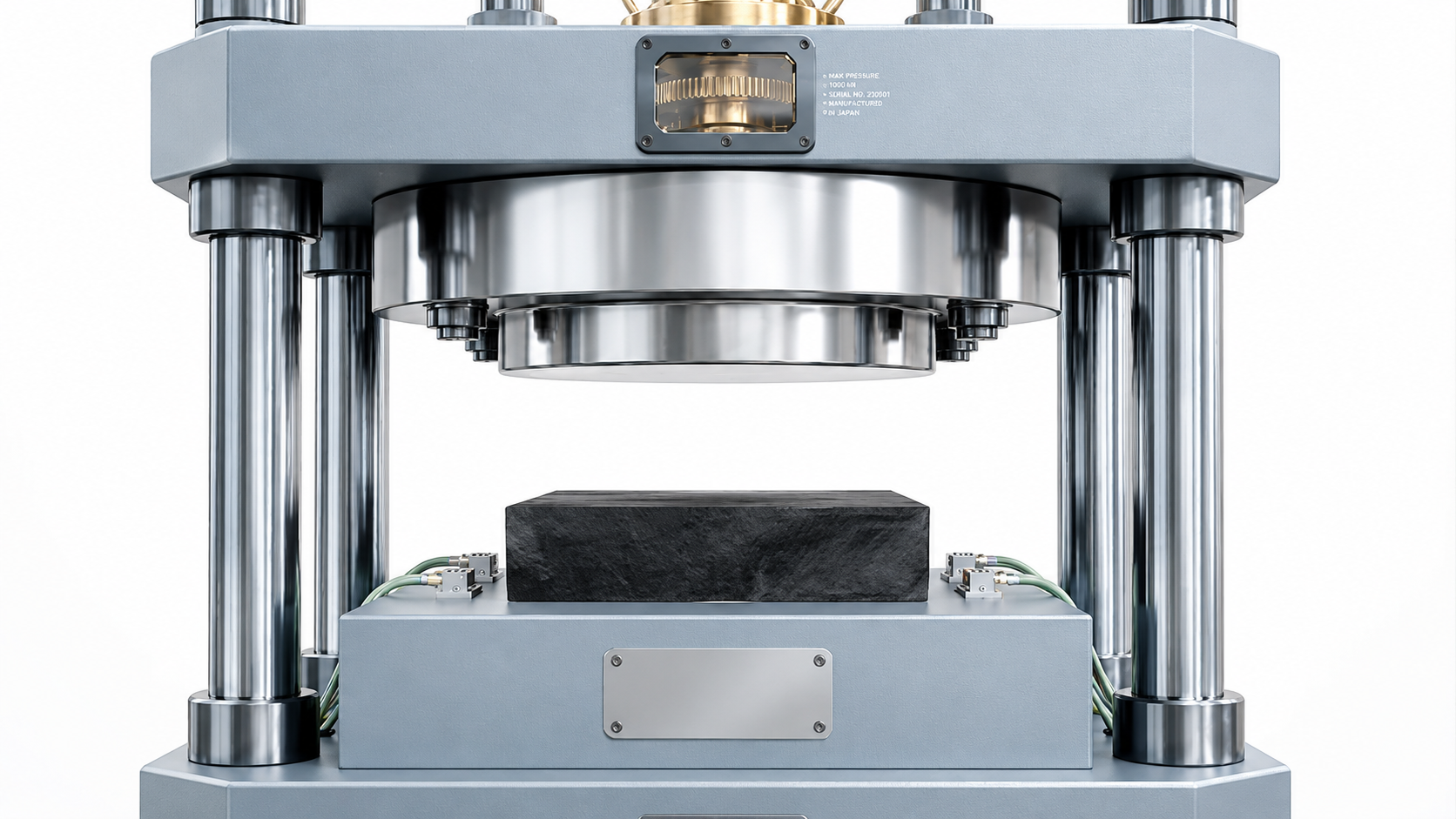
Compression molding utilizes a mold consisting of two primary sections: an upper mold and a lower mold.
Process Principle
A pre-compounded rubber charge is placed into the lower mold cavity. The upper mold is then closed, and heat and pressure are applied to compress the rubber material, allowing it to flow and fill the mold cavity. The material is subsequently cured under controlled temperature and cycle time to achieve the required shape and mechanical properties.
Advantages
- Simple mold design with relatively low tooling costs
- Minimal material waste
Limitations
- Lower dimensional accuracy compared to other molding processes
- More difficult to control rubber flow within the mold cavity
- Higher flash generation, requiring additional trimming operations
Suitable Applications
- Rubber pads and gaskets
- Thick or large-sized components
- Parts with relatively simple geometries
2. Transfer Molding
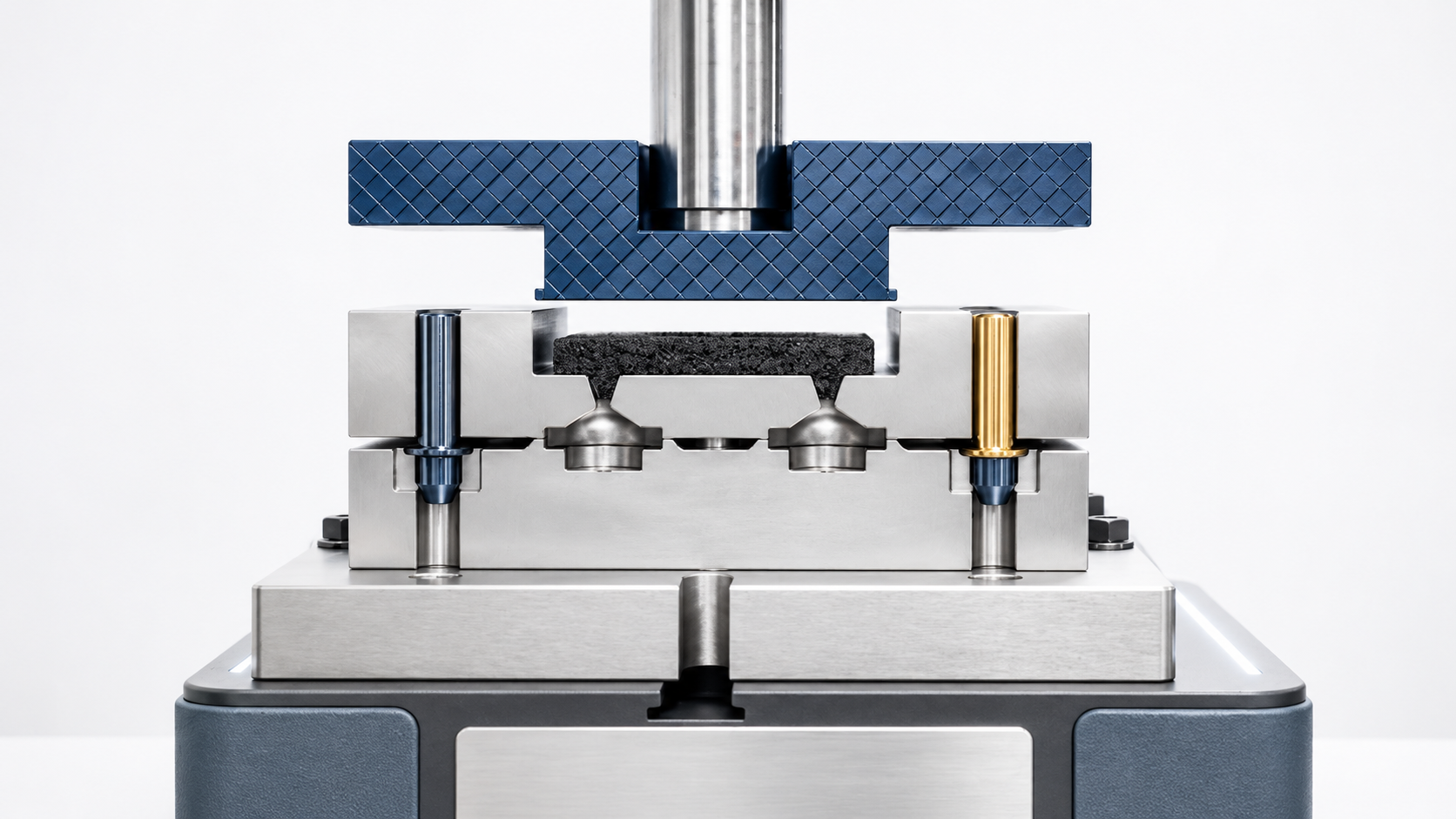
Transfer molding utilizes a three-part mold system consisting of an upper mold with a transfer pot, a lower mold, and a transfer plunger.
Process Principle
The upper and lower molds are first clamped together. Pre-compounded rubber material is placed into the transfer pot located above the mold cavity. A plunger then applies pressure to force the rubber into the mold cavity. The material is subsequently cured under controlled temperature and cycle time until the final component is formed.
Advantages
- Better control of rubber flow compared to Compression Molding
- Suitable for parts requiring greater detail and moderate geometric complexity
- Reduced flash generation
Limitations
- Material residue typically remains in the transfer pot and runner system
- More complex mold construction
- Higher tooling and processing costs than Compression Molding
Suitable Applications
- Components requiring moderate dimensional precision
- Rubber parts incorporating inserts such as metal components
3. Injection Molding
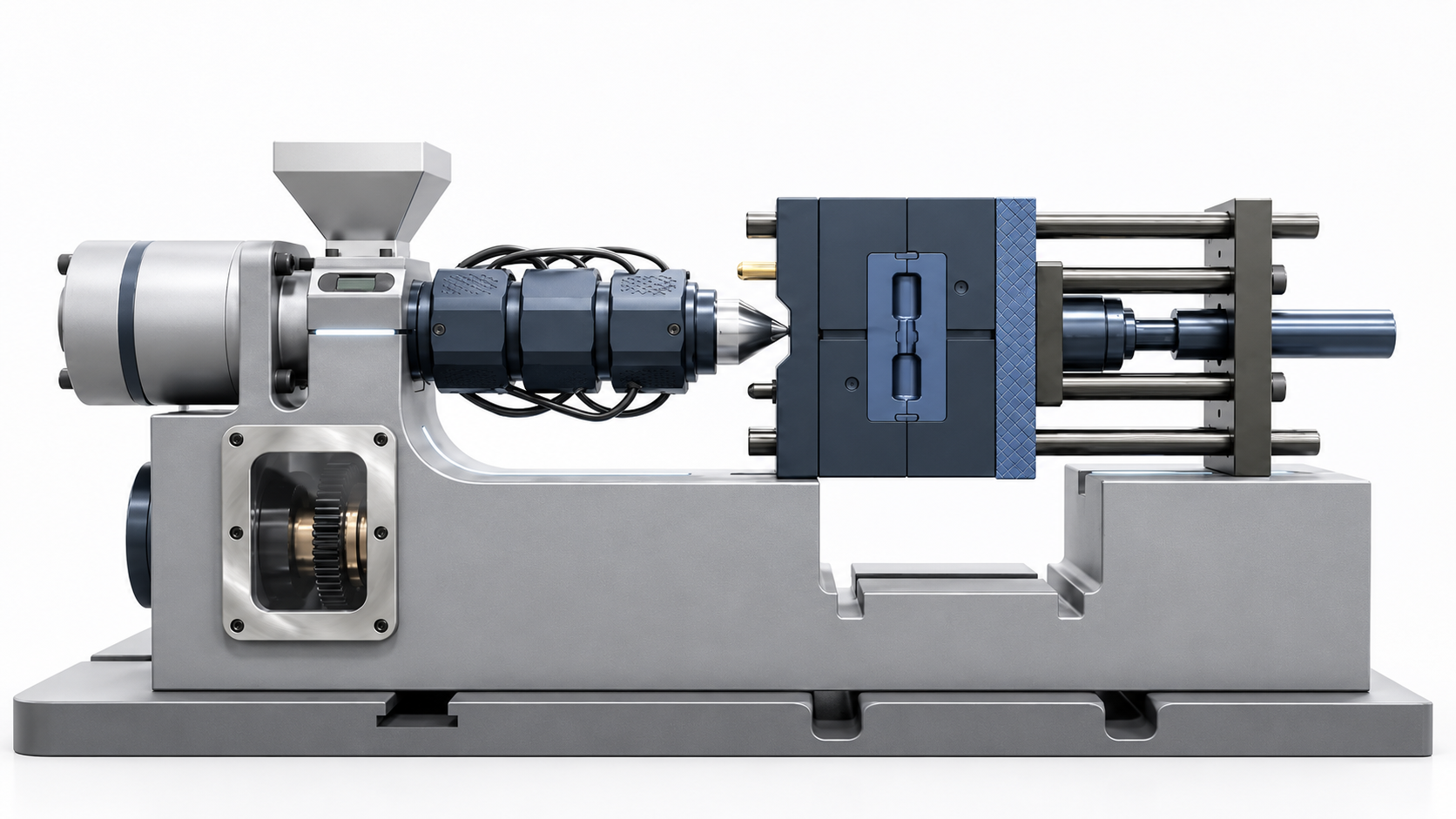
Injection molding is a high-precision manufacturing process in which rubber compound is injected into a closed mold cavity under high pressure.
Process Principle
Pre-compounded rubber is fed into the injection unit, where it is plasticized through controlled heat and screw rotation. Once the mold is fully closed, the rubber is injected into the mold cavity under high pressure until completely filled. The material is then cured under controlled temperature and cycle time to achieve the desired geometry and performance characteristics.
Advantages
- Excellent dimensional accuracy and repeatability
- High production efficiency for large-volume manufacturing
- Consistent quality control
- Reduced material waste
Limitations
- High investment cost for machinery and tooling
- Requires precise process control. Excessive injection speed may cause material backflow, while insufficient speed or improper synchronization with cure characteristics may result in premature curing inside the injection barrel.
- Runner and gate design must be carefully optimized, as they directly affect rubber flow behavior and product quality
Suitable Applications
- Highly complex rubber components
- Small- to medium-sized parts
- Seals, O-rings, and automotive rubber components
Comparative Summary
| Factors | Compression Molding | Transfer Molding | Injection Molding |
| Mold Complexity | Low | Medium | High |
| Dimensional Accuracy | Low | Medium | High |
| Material Waste | Low | Medium | Low |
| Initial Investment Cost | Low | Medium | High |
| Best Suited For | Large parts and simple geometries | Parts with inserts and moderate complexity | High-volume production and complex components |
Looking for the right rubber molding process for your product?
At Inter Rubber, we are ready to help you select the most suitable manufacturing process to achieve the right balance of quality, cost, and performance.